By Dr. Anthony Schmidt, Director of Collections and Curation
Elias Boudinot: From Revolutionary War to American Bible Society

What if one of the nation’s most important founders believed that his greatest achievement came not on the battlefield, or in the halls of power, but in helping ordinary people obtain a Bible?
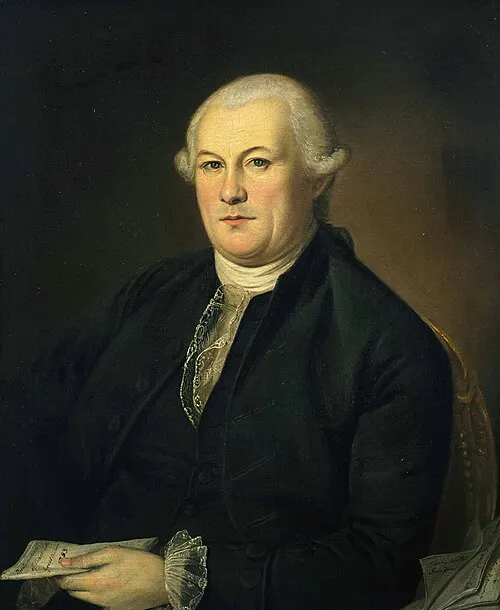
Figure 1: Elias Boudinot, by Charles Willson Peale (1741–1827). Public domain. Source: Museum of the American Revolution via Wikimedia Commons.
Elias Boudinot (1740–1821) was born in Philadelphia in 1740. His upbringing placed him within the religious and intellectual currents of colonial America. At the time, the city was less than 40 years old, but it had already grown to become one of the largest cities in British North America, with 11,000 people, fueled mostly by a surge of European immigration. His father was a well-connected merchant and silversmith who descended from French Huguenots who had fled persecution under King Louis XIV. As a child, Boudinot lived next door to Benjamin Franklin. The future founding father had already made a name for himself as a printer, author, and Enlightenment thinker. It was around this time that he began his soon-to-be-famous experiments with electricity.
Boudinot’s early years were deeply influenced by the Great Awakening, a widespread series of religious revivals that would profoundly shape colonial life in general. George Whitefield, one of the most celebrated ministers of the revival, would befriend Boudinot’s father and would baptize Elias as a child. This religious upbringing would help cultivate a lifelong interest in Bible study, especially biblical prophecy. The awakening’s rejection of existing power structures and its focus on empowering individuals would help carry Boudinot, and the rest of the colonies, toward a political revolution.
The war for independence thrust Boudinot into public service. In the 1760s, he moved to New Jersey to study law and established a successful legal practice. As the crisis with Britain deepened, he joined the Patriot cause. In 1775, he served on New Jersey’s Committee of Safety. Two years later, he accepted a job nobody wanted. In 1777, upon the recommendation of Alexander Hamilton, then George Washington’s aide-de-camp, General Washington appointed Boudinot as the Continental Army’s first Commissary General of Prisoners. Washington had already asked another candidate, who declined. The position was demanding and often distressing. Prisoners required food, shelter, and supervision when resources were already severely limited. According to Boudinot’s journal and correspondence, he offered to take out personal loans to help cover his department’s expenses. In this role, Boudinot spent the historically brutal winter of 1778 at Valley Forge, but developed a close relationship with Washington and other leaders of the Revolution.
Boudinot began a career in politics later, in 1778, when he was elected as a New Jersey delegate to the Second Continental Congress. He would quickly become one of the leading statesmen of the early republic. From 1782–1783, he served as president of Congress. Though the office of congressional president was not equivalent to the modern presidency, it carried considerable symbolic importance during the fragile transition from war to peace. In that capacity, he helped oversee the government at a crucial moment as the war drew to a close, signing the preliminary articles of peace that would eventually lead to the Treaty of Paris, formally ending the Revolutionary War.
From 1789 to 1795, Boudinot served in the US House of Representatives, participating in the difficult work of establishing the institutions of constitutional government. He also took a strong interest in the nation’s religious and moral life. In September 1789, during the first session of Congress, Boudinot urged the House to recognize the blessings of American independence with prayer and thanksgiving. His remarks helped inspire the congressional support that led President George Washington to issue the nation’s first Thanksgiving proclamation. In 1795, he was appointed by Washington as Director of the United States Mint. He retired from this position in 1805, having worked under the administrations of Washington, John Adams, and Thomas Jefferson, an indication of the respect he commanded across the young republic’s political spectrum.
Boudinot’s faith led him to believe the Bible was vitally important for America’s future. It was not simply a private devotional book, but rather a source of moral instruction that could strengthen families, communities, and the republic itself. In 1801, he published The Age of Revelation, a response to Thomas Paine’s controversial The Age of Reason. Paine had challenged traditional Christianity and the authority of the Bible, famously calling its historical and miraculous accounts into question. Boudinot answered by defending the Bible’s credibility and the rational foundations of Christian belief. His book was addressed in part to his daughter, reflecting his conviction that the rising generation needed a firm religious foundation.
This conviction found its greatest expression in 1816, after reading reports from ministers who had traveled through the expanding United States saying that many Americans lacked access to Bibles. Several local Bible societies across the country were already distributing Bibles, but their work was fragmented and uncoordinated. Boudinot envisioned cooperation on a national scale. In January 1816, he appealed to existing societies to unite their resources.
On May 11, the American Bible Society was founded in New York City, bringing together religious and civic leaders from across denominational and political lines. Boudinot was chosen as its first president. He had helped secure American independence, had guided the Continental Congress, had established the federal government, and had administered the nation’s mint. He now devoted his remaining years to making the Bible available to the people whose republic he had helped build. “I am not ashamed to confess,” he stated, “that I accept of the appointment as the greatest honor that could have been conferred on me this side of the grave.” During his five-year presidency, the society organized hundreds of auxiliary Bible societies, employed stereotype plates and steam-powered presses, and began distributing Bibles across the United States and abroad, making it arguably more accessible than ever before.
The appointment was a fitting climax to a remarkable career. Boudinot did not just live through the American Revolution, he lived the American Revolution. He is not as famous today as Washington or Jefferson, but his influence on the nation’s founding was vast. For him, the revolution was not just a political or social event. It was also a religious project and its success depended upon the moral and spiritual formation of citizens. His election as president of the American Bible Society crowned a long and fruitful life of service and disclosed his hope that the nation he helped establish would long endure.


Figures 2 & 3: Elias Boudinot's Bible, Geneva-Tomson Version, Barker's Bible 1595. Notice Boudinot’s signature on the page in figure 3.
Come see Elias Boudinot’s Bible and learn more about this founding father in Museum of the Bible’s Sacred Liberty exhibit, available for free on Floor 1 until February 2027.
Based on Your Interests