Recommended Searches


About the Exhibition
/
November 7, 2026 – February 28, 2027
Location: Floor 5
Cost: Included with Admission
Time: 30–45 minutes
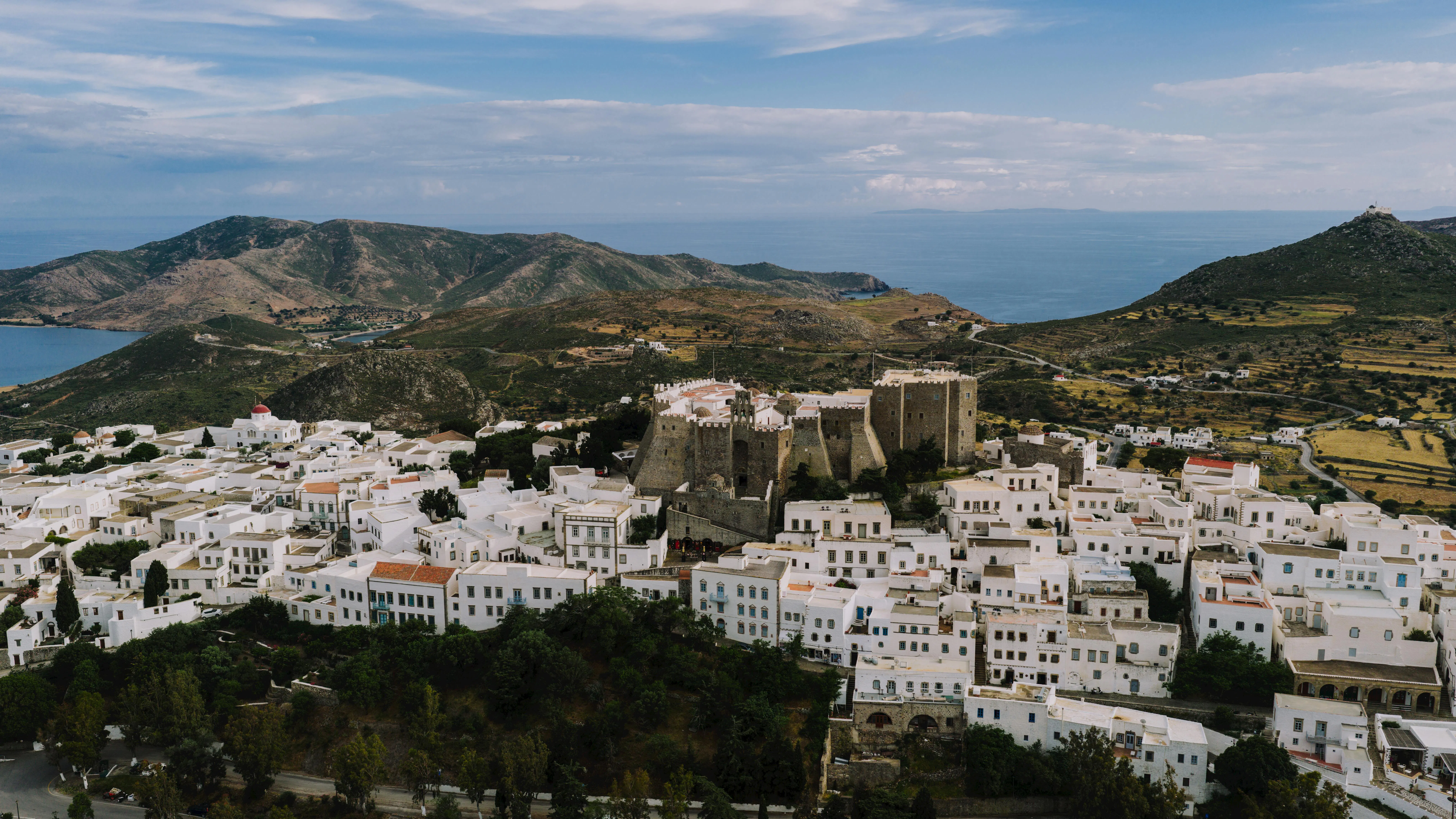
At the personal request of His All-Holiness Ecumenical Patriarch Bartholomew, two important Greek Orthodox monasteries that are under his supervision have generously allowed treasured Byzantine icons to travel to America for the very first time. These sacred images from Vlatadon Monastery in Thessaloniki and the Monastery of St. John the Theologian on Patmos have borne witness to the prayers of their people, over hundreds of years of devotion. Each monastery is located in a place associated with books of the Bible—Paul preached in Thessalonica, and John received his visions on Patmos. Both monasteries are recognized as UNESCO World Heritage Sites due in large part to the exquisite quality of their Byzantine icons which play a role in the authentic practices of the Greek Orthodox faith.
The icons will be on display from November 7, 2026, to February 28, 2027, only at Museum of the Bible in Washington, DC.
Come discover the Bible's role in history through the museum's exhibitions, events, and programs.


Twenty-four icons created between 1200 and 1600 will showcase the exquisite craftsmanship of the workshops in Thessaloniki, Constantinople, and Patmos. At the same time, they will highlight how icons as venerated objects depicting biblical scenes and persons take on deep meaning within the practices and beliefs of the Greek Orthodox Church. They are not simply pieces of religious art used for decoration but objects with significant religious purposes. This exhibition will give visitors a rare glimpse into the Orthodox world.
Exhibition Themes
This exhibition is structured around four questions. The first question, “What is an icon?” introduces a basic understanding that icons are not merely works of art but are an integral part of the practice of Orthodox Christianity. The second question, “What do icons portray?” introduces biblical themes, Orthodox Christian beliefs and practices, and the lives of venerated saints. The third question, “Who made these icons?” introduces the concept that making icons is a living spiritual practice that has continued from ancient times to the present day. The last question, “Where do these icons come from?” introduces two places in Greece that are known from the Bible: Thessaloniki, ancient Thessalonica where Paul preached, and Patmos, the island where John wrote down his Revelation. Both places continue to be prominent centers of Orthodox Christianity.
Speaker Series
Through a series of educational panels featuring leading scholars and clergy, this program aims to deepen public understanding of the spiritual and cultural significance of Byzantine icons. These discussions will illuminate the Orthodox tradition’s contributions to sacred art and foster appreciation for its historical and theological context.
Image Credits
Header Image:
Detail of Icon of the Hospitality of Abraham, end of the 15th century. All rights reserved. © The Holy Monastery of Vlatadon, Thessaloniki - Hellenic Ministry of Culture/Ephorate of Antiquities of Thessaloniki City, 2026.
Red Background Image:
Detail of Icon of Passion Scenes, late 14th century. All rights reserved. © The Holy Monastery of Vlatadon, Thessaloniki - Hellenic Ministry of Culture/Ephorate of Antiquities of Thessaloniki City, 2026.
3 Column Images:
Left—Icon of St. John the Theologian, ca. 1500. All rights reserved. © The Holy Monastery of St. John the Theologian, Patmos - Hellenic Ministry of Culture/Ephorate of Antiquities of the Dodecanese, 2026.
Center—Icon of the Burning Bush and the Prophet Moses beginning of the 17th century. All rights reserved. © The Holy Monastery of St. John the Theologian, Patmos - Hellenic Ministry of Culture/Ephorate of Antiquities of the Dodecanese, 2026.
Right—Icon of the Nativity, ca. 1480–1500. All rights reserved. © The Holy Monastery of St. John the Theologian, Patmos - Hellenic Ministry of Culture/Ephorate of Antiquities of the Dodecanese, 2026.