Recommended Searches


Icons as Cultural Heritage
Through a series of educational panels featuring leading scholars and clergy, this program aims to deepen public understanding of the spiritual and cultural significance of Byzantine icons. Throughout 2026, these discussions will illuminate the Orthodox tradition’s contributions to sacred art and foster appreciation for its historical and theological context.
This lecture is the third of a series that is part of the icon exhibition, Revealing the Hidden: Byzantine Icons from Thessaloniki and Patmos, that will bring extraordinary icons to the museum from November 2026 through February 2027, from two holy, stavropegial monasteries of the Ecumenical Patriarchate of Constantinople, Vlatadon Monastery in Thessaloniki and the Monastery of St. John the Theologian on Patmos. This exhibition celebrates the 35th anniversary of the enthronement of His All-Holiness Ecumenical Patriarch Bartholomew I.
Light refreshments will be served at this event.
Header image accreditation: Icon of the Burning Bush and the Prophet Moses, beginning of the 17th century. All rights reserved. © The Holy Monastery of St. John the Theologian, Patmos - Hellenic Ministry of Culture/Ephorate of Antiquities of the Dodecanese, 2026.
Dec 3, 2026 - Dec 3, 2026
6:00 PM - 8:00 PM EST
Scholars Initiative Conference Room, Floor 5R
Free Admission (Event Ticket Required)
In Person Event
Virtual Event
Get Tickets
Moderator

Dr. Elizabeth H. Prodromou (Boston College; Chestnut Hill, MA)
Elizabeth Prodromou is Professor of the Practice in the International Studies Program at Boston College and Non-Resident Senior Fellow at the Atlantic Council’s Eurasia Center. Her academic and practitioner work focus on the intersection of geopolitics, religion, and human rights, especially concentrating on the Eastern Mediterranean and Middle East. She served on the US Commission on International Religious Freedom (2004–2012), and she works in various policy and NGO contexts on religious pluralism and peacebuilding. Her publications have appeared in journals such as The Review of Faith and International Affairs, Journal of Democracy, Journal of the American Academy of Religion, and Orbis. Some of her publications on Orthodox Christianity include co-edited volumes (Eastern Orthodox Christianity and American Higher Educations; and forthcoming co-edited volume on Dissent, Power, and Christian Identity After Nicaea).
Speakers
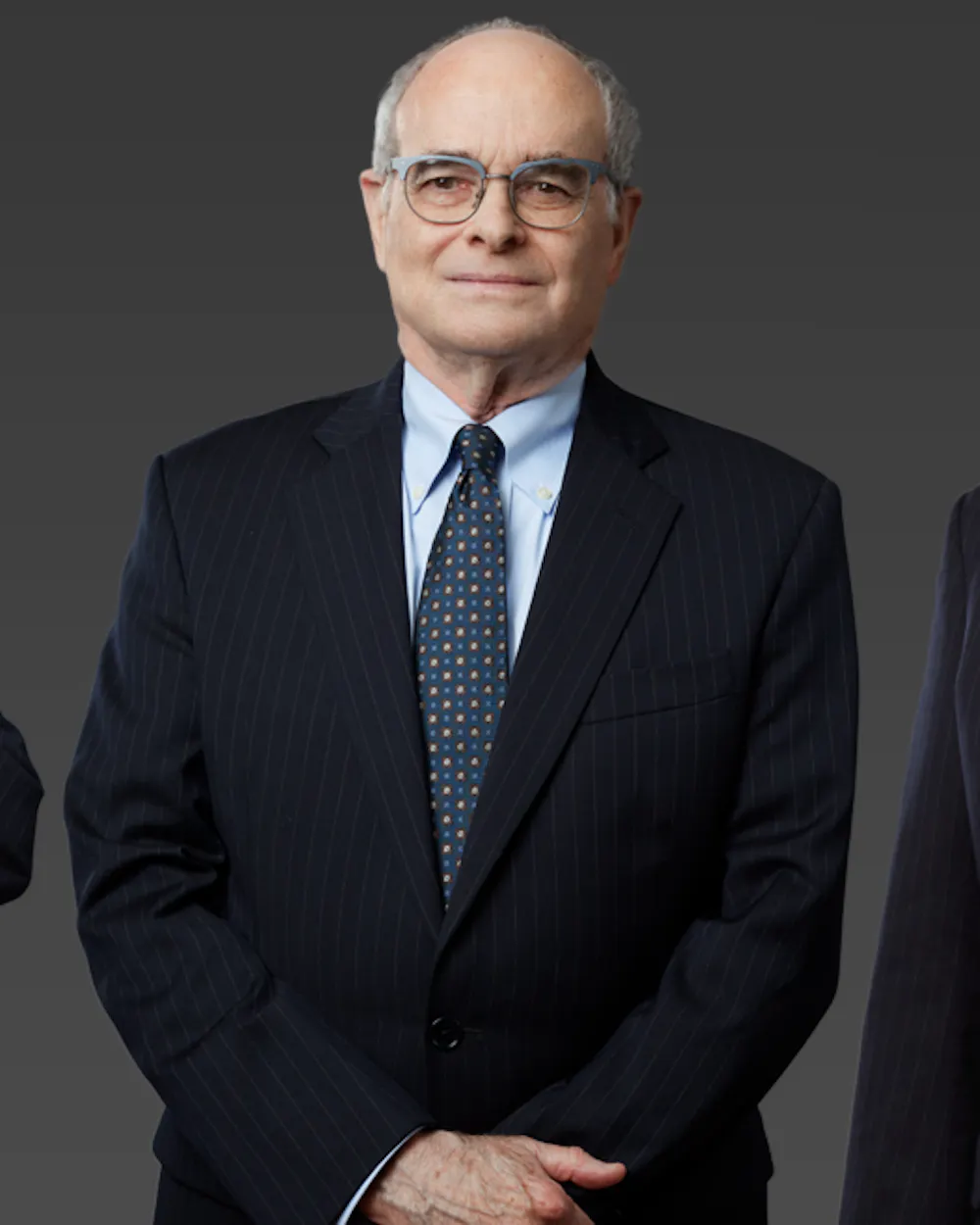
Thomas R. Kline
Tom, Of Counsel with Schindler Cohen & Hochman LLP, represents clients on art, cultural property, and museum issues including providing advice, documenting transactions, and handling claims and litigation. He is best known for such groundbreaking cases as Cyprus v. Goldberg (church mosaics stolen during Turkish occupation), Quedlinburg v. Meador (church treasures stolen by US Army lieutenant), Goodman v. Searle (first US claim of Nazi art theft since post-War period), Vineberg v. Bissonnette (forced sale), Republic of Turkey v. Christie’s and Michael Steinhardt (claim for antiquity failed due to delay and prejudice), and the settlement agreement between Museum of Fine Arts, Boston, and the descendants of David Drake, also known as Dave the Potter (two monumental stoneware jars, one with a two-line poem, made by enslaved potter in 1857 in Old Edgefield, South Carolina, returned to potter’s family). Beginning in 2017, Tom represented Museum of the Bible in connection with review of its collection and the return of a few stolen objects, most notably, a manuscript that had been stolen from the Kozinitza Monastery in northern Greece during World War I. For roughly 20 years, Tom co-taught a seminar on museums and cultural property as Adjunct Professorial Lecturer in the museum studies program, George Washington University, and served as president of the Lawyers’ Committee for Cultural Heritage Preservation. He is a member of the Scientific Advisory Board, Kunst und Recht (“Art and Law”). For protecting German Cultural Heritage, Tom was awarded the Officer’s Cross of the Order of Merit of the Federal Republic of Germany (Das Verdienstkreuz des Verdienstordens) and has also received the Medal of Cyprus Technical University for protecting the cultural heritage of Cyprus.
Abstract:
“Protecting Cultural Heritage: Religious Artifacts at Risk”
By their very nature as objects that reflect and transmit culture, religious artifacts attract both positive and negative attention. During times of civil unrest, warfare, and military occupation, religious objects have been targeted for looting and destruction. Sometimes it is affirmative hostility to the religion, other times indifference and often the financial value that ancient religious objects can bring on the art market. This presentation will review priceless frescoes and mosaics looted from churches in Turkish-occupied Cyprus and a manuscript that was stolen from the Kosinitza Monastery—also known as the Theotokos Eikosiphoinissa Monastery, which is an ancient Greek Orthodox sanctuary located on Mount Pangeon in northern Greece near the city of Drama during World War I—and that turned up in the collection of Museum of the Bible. The presentation will focus on the thefts, the events occurring during the passage of time, and the challenge of recovering the artifacts.
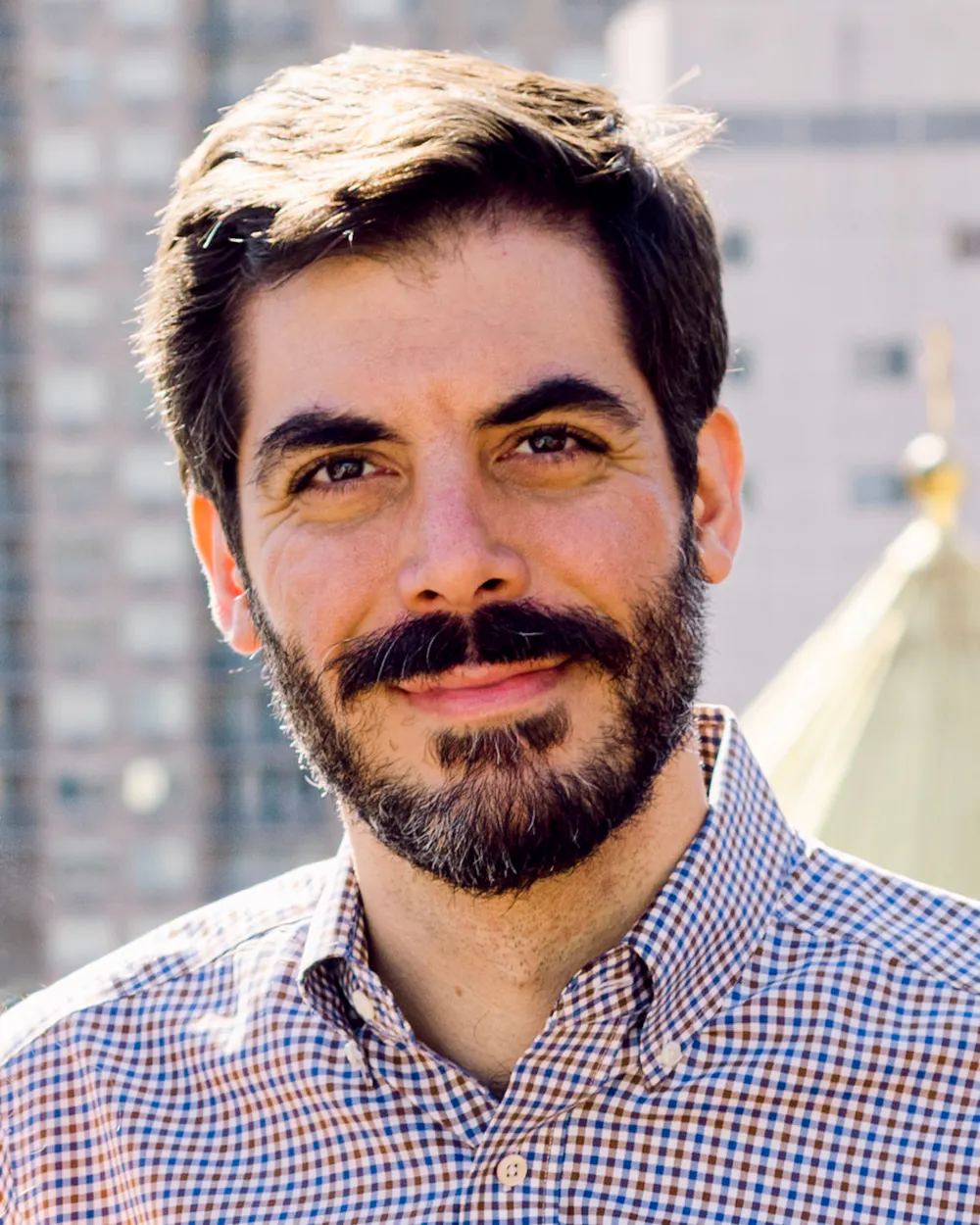
Yiannis Avramides
Yiannis Avramides is the Deputy Director and Head of Partnerships at the Suzanne Deal Booth Institute for Heritage Preservation at World Monuments Fund (WMF) in New York. The institute serves as WMF’s center for training, research, professional networks, and academic partnerships in the heritage field. As deputy director, Yiannis helps set the institute’s strategic direction and cultivates partnerships with academic and professional institutions to expand the reach and impact of WMF's work. Drawing on broad experience across the organization, he currently oversees a portfolio of conservation field projects in Albania, Greece, and Turkey, including WMF’s post-earthquake heritage recovery work in Antakya (ancient Antioch), developing a reconstruction plan for the city's historic Greek Orthodox Church and Synagogue in partnership with local faith communities. He earned a BSE in Civil Engineering and Architecture from Princeton University and an MS in Historic Preservation from Columbia University.
Abstract:
The February 2023 earthquakes in southern Turkey destroyed the Greek Orthodox Church of Antakya (ancient Antioch), a late nineteenth-century building serving an Arabic-speaking Orthodox community, in a city whose Christian roots trace back to the earliest days of the faith, and severely damaged the city's historic synagogue, the last physical trace of a Jewish presence stretching back over two millennia. The church held a documented collection of icons, most of which were lost during the disaster and in its aftermath. Starting later in 2023, World Monuments Fund (WMF) has worked in partnership with the church foundation to secure the site, salvage architectural fragments, and develop a conservation management plan. The project is now advancing towards a full reconstruction design using seismically resilient construction methods, with the aim of equipping the church foundation with the technical documentation and materials needed to undertake reconstruction. This presentation will discuss the project as a case study in post-disaster recovery of sacred heritage, touching on the challenges of protecting religious objects and building materials, the importance of community partnerships in sustaining both tangible and intangible heritage, and what it takes to move from emergency stabilization to long-term recovery.

Stefanos Alexopoulos
Stefanos Alexopoulos is a Greek Orthodox priest (the son and grandson of priests) and associate professor of liturgical studies and the director of the Institute for the Study of Eastern Christianity at the Catholic University of America. Having studied Orthodox theology at Holy Cross Greek Orthodox School of Theology and trained as a liturgist at the University of Notre Dame under the direction of Maxwell Johnson, in the school of comparative liturgy of the late Robert Taft, his research interests lie in the history of Byzantine liturgy and particularly in the evolution of liturgical structures and offices as witnessed in the Byzantine manuscript tradition.
Realizing, however, that liturgical manuscripts do not necessarily give witness to what was actually taking place on the ground and how the “official” liturgy was received by the faithful, he is fascinated by other witnesses to the liturgical life and experience of the Byzantines. These would include, but not limited to, inscriptions, hagiography, iconography, and monastic texts.
This dialogue of sources allows the exploration of the intersection between official or public liturgy (how liturgical texts envision the liturgical experience and its message) and private piety (what people actually experienced, did, and believed) and gives us insights regarding the formative power of the liturgical experience on the “Byzantine self.”
He has published two monographs, four edited books and over 40 peer-reviewed articles that have appeared in English, Greek, German, and Russian.
Abstract:
One encounters icons in spaces of worship, in processions (portable icons) and in private spaces of prayer (homes). Icons are usually examined as cultural religious objects of piety and faith, to be observed and described. The purpose of this lecture is to discuss icons from a different perspective and look at them not as cultural “objects” of a faith, but as “subjects” that are eyewitnesses to a faith that is ingrained in Orthodox culture. Icons are eyewitnesses to expressions of worship, to faith in the public sphere, to demonstrations of private piety. In this context, the themes of Divine presence, intimacy with the Divine, and the relationship between the Divine and humanity will be explored, through the “eyes” of icons.